Mobile
End-to-End
AI
Native App

Logistics Mobile App


Empowering drivers with digital tools that save time and millions annually

Role
Senior UX Designer
Lead UX Designer
Timeframe
3 months (launch)
1 year 10 months (total time)
Team






Vance Waldron
Senior UX Designer
Teresa Cuddy
Product Owner
David Morley
Lead Software Engineer
Arjun Curat
Senior Software Engineer
Rachel Borgwald
Software Engineer
John Bodenhamer
Software Engineer
Andrew Dillon
Software Engineer
1 UX Designer
5 Developers
1 Product Owner
Context
UniGroup's new CTO formed two teams to modernize half-century-old practices. Research revealed drivers faced handwritten paperwork, communication breakdowns, and outdated systems costing $27 million annually in penalties and processing. These inefficiencies created operational nightmares and poor customer experiences.
Solution
Stride became UniGroup's first mobile app, digitizing eight shipment documents, achieving 91% driver adoption, and saving $16 million annually while dramatically improving communication, reducing penalties, and enhancing customer satisfaction through streamlined digital workflows.
Responsibilities
User
Research
Competitive
Analysis
Journey
Mapping
Wireframing
Prototyping
Usability Testing
Branding
Document
digitalized
8
NPS
overall average
85
Reduction
operational penalties
74
%
Adoption Rate
among drivers
92
%
Business
User
Need
UniGroup needed to improve operational efficiency dramatically to reduce millions in annual costs from delayed shipments, processing penalties, and communication breakdowns that plagued the post-booking process.
User
Need
Drivers needed reliable communication systems that didn't require constant phone calls, less physical paperwork to manage and mail, and immediate access to complete shipment details without coordinator gatekeeping.
Business
User
Need
UniGroup needed to improve operational efficiency dramatically to reduce millions in annual costs from delayed shipments, processing penalties, and communication breakdowns that plagued the post-booking process.
User
Need
Drivers needed reliable communication systems that didn't require constant phone calls, less physical paperwork to manage and mail, and immediate access to complete shipment details without coordinator gatekeeping.
Business
User
Need
UniGroup needed to improve operational efficiency dramatically to reduce millions in annual costs from delayed shipments, processing penalties, and communication breakdowns that plagued the post-booking process.
User
Need
Drivers needed reliable communication systems that didn't require constant phone calls, less physical paperwork to manage and mail, and immediate access to complete shipment details without coordinator gatekeeping.


Over two weeks, I conducted 36 user interviews, multiple ride-alongs on household moves, and contextual inquiries with drivers, coordinators, and warehouse staff. I also reviewed past research, analyzed operational data, and conducted competitive analysis. The research revealed four critical inefficiencies costing $27 million annually.
The
4 Problems
Drivers served as the centerpiece of the post-booking process, directly handling the majority of shipment execution, so we focused our research on identifying and solving the problems they faced daily.
Lack of Information
To get missing details, like an inventory list, drivers called the Coordinator, who relayed it over the phone to be written by hand and sent off with the rest of the paperwork.
04
Out of Date Technology
Drivers relied on a 50-year-old DOS-like mainframe or an outdated third-party mobile app that left out shipment details, fell out of sync, and crashed half a dozen times a day.
03
Paperwork Overload
Every shipment could mean managing up to 50 pages of documents, making sure the customer initialed and signed everything correctly, then mailing it all to the coordinator once the job was done.
02
Communication Difficulties
Getting on-time shipment updates was a struggle for everyone involved. It usually meant a string of phone calls and emails, then the Coordinator manually entering it into the antiquated mainframe system.
01
After presenting my findings, I organized a 3-day co-design workshop with 31 drivers and the dev team. Together, we decided the best solution was to build UniGroup's first mobile app for drivers. I then spent three weeks creating journey maps, conducting card sorting for information architecture, and developing prototypes while collaborating daily with developers to ensure feasibility.


The
Challenges
We faced multiple significant challenges in order to successfully bring a new product to drivers who had been burned by failed technology initiatives for two decades.
Challenge
Skeptic Change Management
Drivers had seen two decades of failed IT initiatives. They knew their process worked and viewed new technology as an impediment to their independence. Previous solutions were unreliable and felt forced into UniGroup's unique workflow.
Resolution
Collaborative Building
I shifted from designing for drivers to designing with them. I organized a 3-day co-design workshop with 31 drivers, treating them as equal partners rather than test subjects. We mapped their frustrations together, brainstormed solutions collaboratively, and built trust through genuine understanding of their work.
Challenge
Legacy System Constraints
Everything at UniGroup ran through a 50-year-old mainframe system. Whatever we built had to interface with it perfectly. The mainframe had limited API capabilities, strict data formats, and couldn't be modified.
Resolution
Work with, not replace… yet
I worked closely with the dev team to understand technical constraints upfront, designing within those boundaries rather than fighting them. We built a middleware layer to translate between modern mobile and legacy mainframe. I also conducted research with coordinators to ensure our solution improved their workflow as well.
Challenge
Wrong Mental Model
After three weeks of design and testing, our prototype performed beautifully with zero task failures and sub-2-minute completion times. Then I made the critical decision to test with drivers outside our core group who handled different shipment types. The results were devastating with multiple failures and confusion. The general statement was "This isn't how we do our shipments."
Resolution
Quick Model Pivot
I immediately halted development and redesigned the core experience in one week. Instead of organizing around shipments, I shifted to a location-centric model where locations served as parent containers for any number of shipments. This required rethinking data structures mid-sprint, but the dev team had built for agility and pivoted quickly.
After retesting and validating the redesigned prototypes, we continued development. Over the following months, I worked closely with the dev team answering interaction questions and ensuring the final product matched our tested designs. Stride launched with three core capabilities.

Order Details
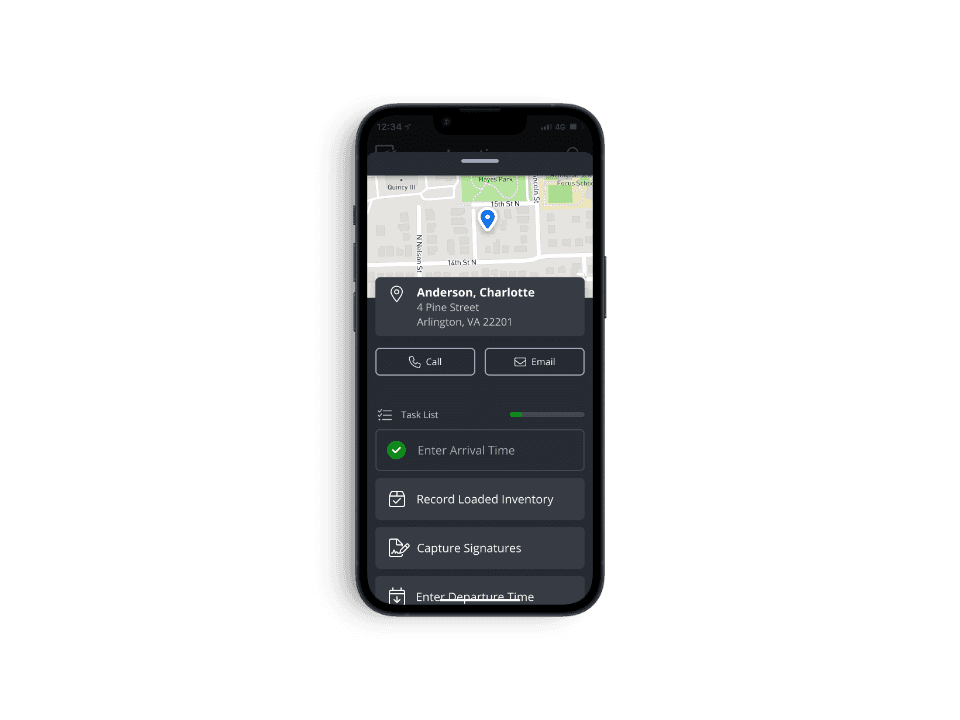
Drivers could now view complete shipment details instantly without coordinator approval, giving them autonomy to plan routes, understand requirements, and prepare for jobs without phone calls or delays eating into productive working hours.

Documents
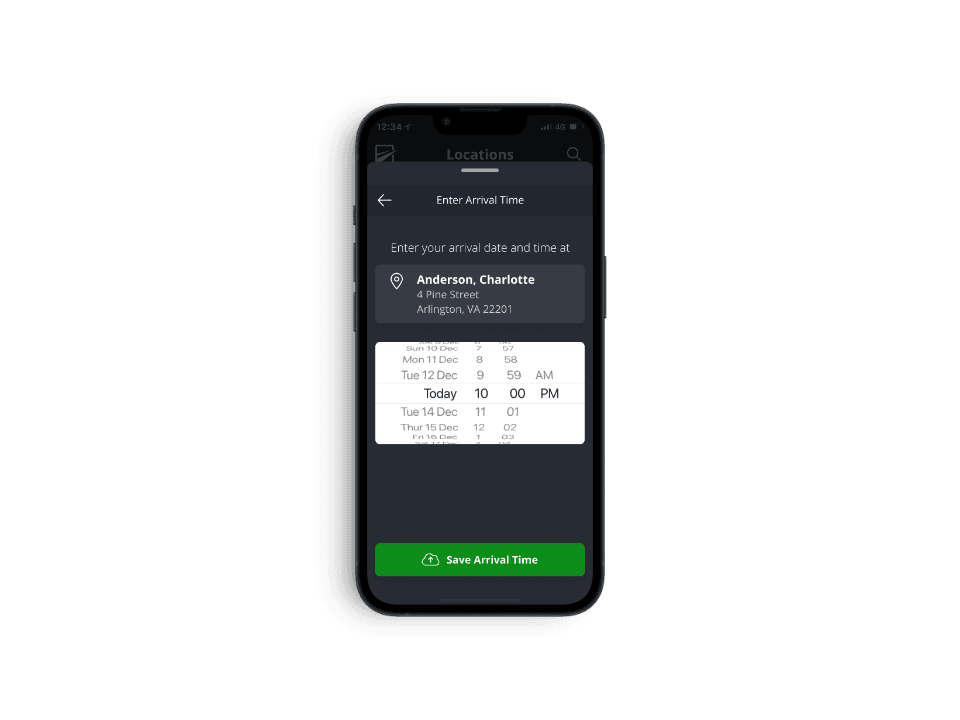
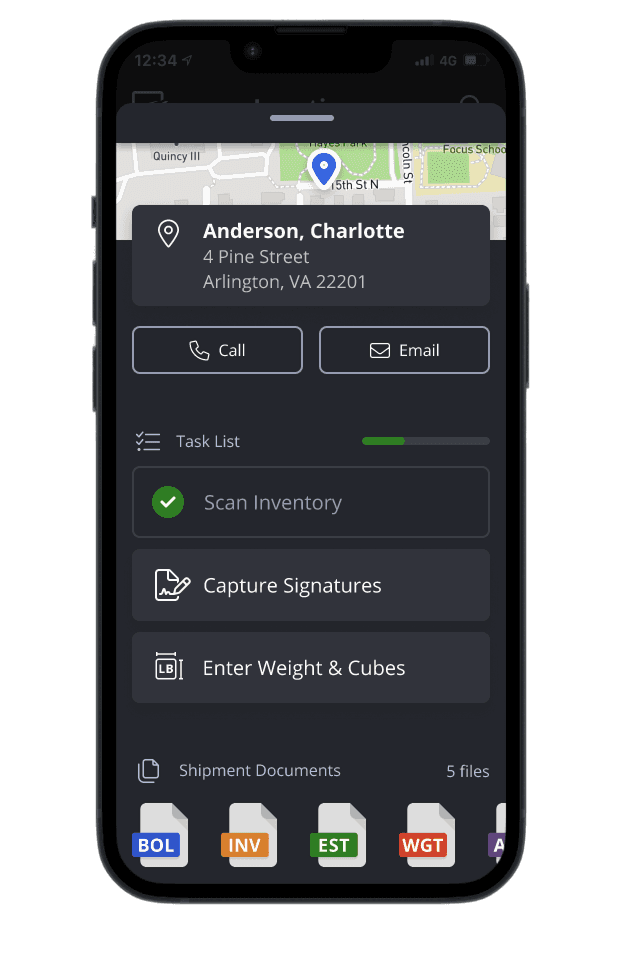
Drivers gained access to view all shipment documents digitally and capture data electronically, including customer signatures, eliminating the need to mail physical paperwork and enabling real-time updates to coordinators upon shipment completion.


Communications
Drivers could quickly communicate with coordinators, agents, and customers through the app without exposing their personal phone numbers, maintaining professional boundaries while dramatically improving response times and information accuracy across all parties.


3, 2, 1… Launch
Initial
Prototype
Initial
Request
Discovery
Research
Teams
Formed
User
Research
Ideation
Workshops
User
Testing
MDP "Pivot"
Prototype
Beta
Testing
MDP
Launch
May 15th
September 8th
The
Outcome
Drivers could quickly communicate with coordinators, agents, and customers through the app without exposing their personal phone numbers, maintaining professional boundaries while dramatically improving response times and information accuracy across all parties.
v1.2
v1.3
v1.4
v1.6


v1.2
Shipment Financials
Problem
Drivers are unable to view how much of a shipment’s cost is allocated for their fuel budget or how much they’ll be paid on the shipment until after it completes.
Solution
Provide all the financial information a Driver is allowed to see, besides other participates payout amounts, within the shipment details.
v1.3
Machine Learning Scan Documents
Problem
Some customers still want or require paper forms to be used with a shipment, making it impossible to use Stride’s digital document features.
Solution
Allow the Driver to use the mobile devices camera to scan a paper document into the Stride, have the new internal machine learning algorithm automatically select the type of shipment document for categorization purposes, & read the information entered on the paperwork to send to the mainframe, removing the need for the Driver or Coordinator to enter it.
v1.4
Flex Inventory Sync
Problem
Having to utilize two different apps to complete a shipment: Flex to be able to review the inventory list & tag information, then Stride for everything else.
Solution
Sync Flex & Stride details together so that a Driver can view the inventory details within Stride & a Packer can review the shipment details in Flex.
v1.6
Geofencing Location
Problem
Upon arriving or leaving a location, a Driver is required to enter in their arrival, departure, & ETA dates / times into Stride. Do the manual nature of these task, they’re often not done in a timely manner.
Solution
Utilized the mobile devices GPS to capture the time a Driver arrives or departs a location. Additionally use the departure time to calculate the ETA to the next location using Garmin CDL Navigation.
Document
digitalized
8
NPS
overall average
85
Reduction
operational penalties
74
%
Adoption Rate
among drivers
92
%
Thanks to the press tour, adoption rates improved greatly, as by the end of its first quarter 27% of drivers were exclusively using Stride daily, saving an estimated $1.6 million in operating cost. Month over month it continued to climb and with its successful launch along with the other team’s app, Virtual Survey, the way the enterprise approached IT shifted and by the year’s end an internal startup based on the principles we had used was formed…
Want more details on Stride?
Ah, so you would like a deeper dive into how we went about creating Stride and its impact on the business? Great, let's schedule a call and I would be happy to go over it with you!