Web
Design System
Change Management
Design System

Development
hours saved
3k+
Converted
products
21
Design Debt
reduction
84
%
Building consistency and speed into every product through unified design
Role
Manager, UX Strategy
Timeframe
5 months (launch)
4 years (total time)
Team


Vance Waldron
Manager, UX Strategy
David Morley
Solutions Architect
Neil Goodson
Lead UX Designer
Andrew Dillon
Senior Software Engineer
2 UX Designers
2 Developers
1 Product Owner
Context
Since starting UX at UniGroup, I advocated for design systems but faced resistance for four years. As QDivision launched nine apps with more in the pipeline, inconsistencies plagued our products. During Converge strategic planning, we realized a system-wide design solution was critical for platform success.
Solution
Momentum became the foundation for all UniGroup apps, marketing, and documentation, reducing development time by a third, ensuring accessible experiences, and accelerating Converge's development—ultimately contributing to winning the $7.2 billion DOD contract.


Responsibilities
Service
Design
Competitive
Analysis
Process
Management
Change Management
Vision
Articulation
Conflict Resolution
Project Management

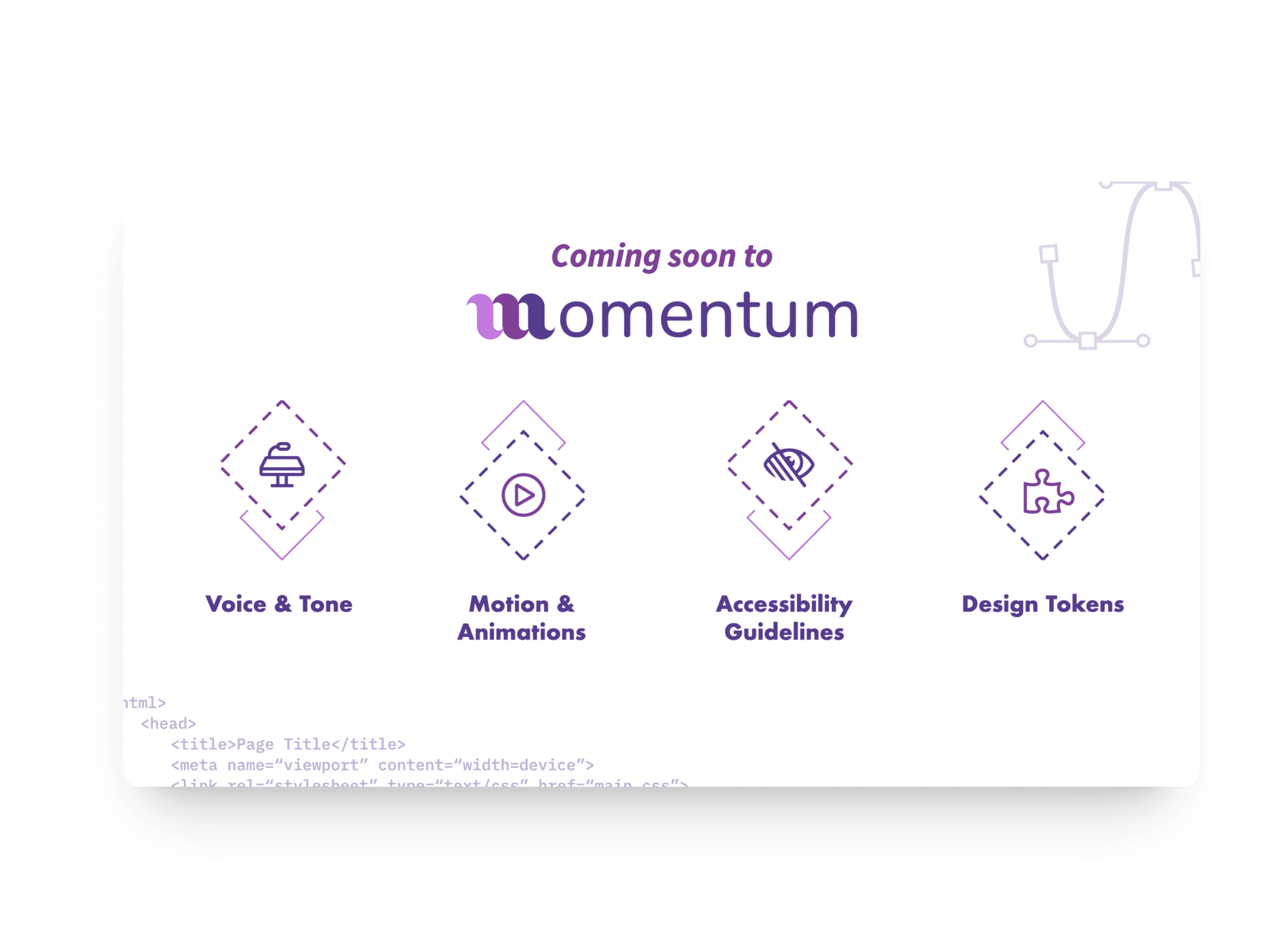
With QDivision's huge product suite—nine apps launched with a dozen more in the pipeline—it became easier to convince my counterparts in product and development that the organization desperately needed a unified design system to maintain consistency and velocity.
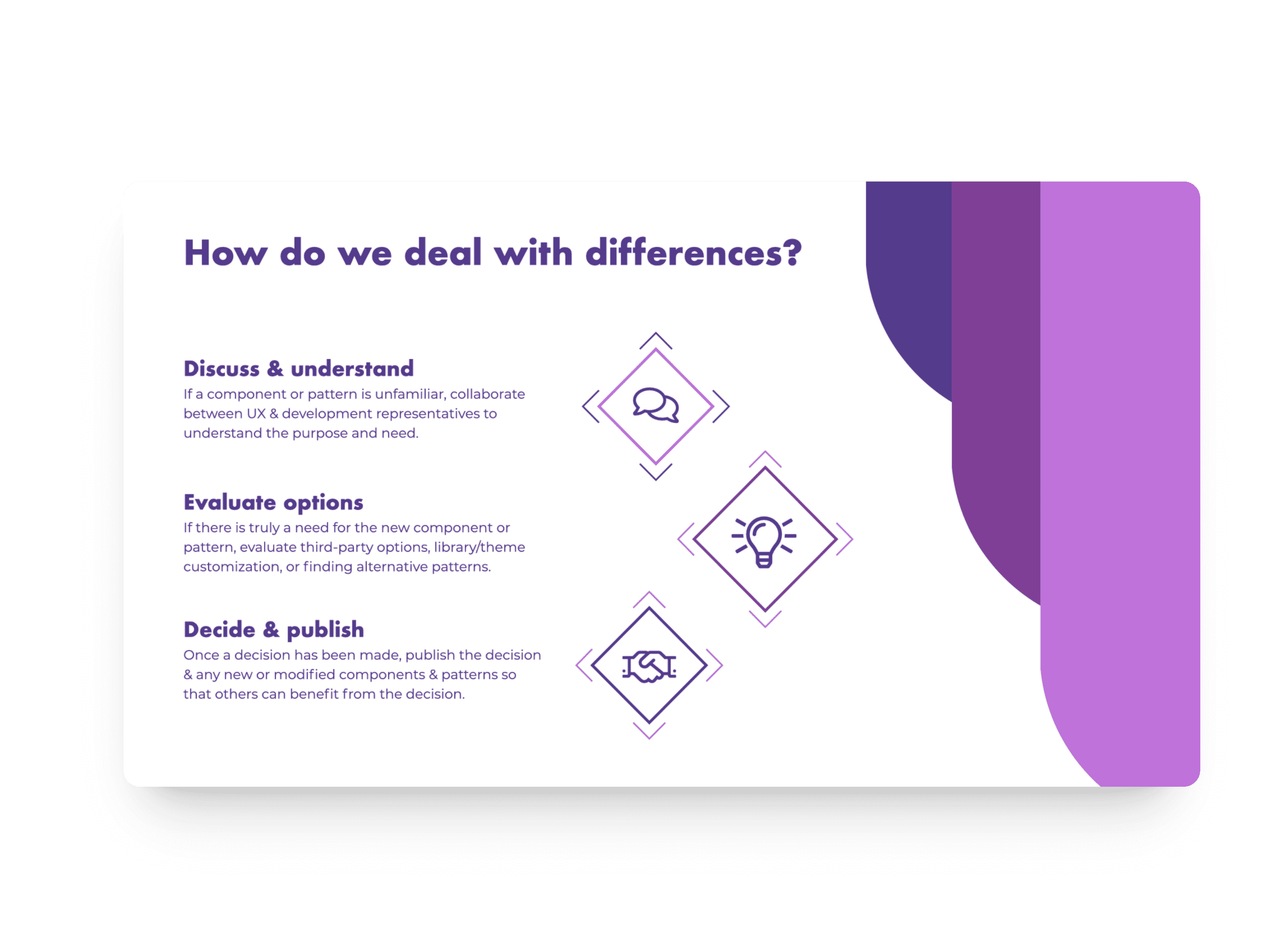
We presented Momentum to executive leadership and received approval, but staffing had to rely on volunteers using their Innovation Time. We needed to pitch Momentum to all of QDivision to recruit contributors. During the presentation, developers asked about timeline, and I made the critical mistake of committing to a specific deadline without accounting for my other responsibilities.



Quality
Every component meets rigorous standards for visual polish and functional excellence.
Reusable
Components integrate seamlessly across all products and codebases without modification.
Accessible
WCAG 2.0 serves as the benchmark for every element, ensuring inclusive experiences.
Collaborative
Open contribution from developers, designers, marketing, and product owners drives evolution.
The
Pillars
Momentum was built on four pillars that served as the unwavering standard for everything created within the system, ensuring consistency and excellence across all implementations.
Base
Elements
Components
Modules
Templates
Momentum's architecture builds like LEGO pieces, with each tier constructed from the previous layer. Blocks form the foundation—colors, typography, spacing. Elements combine blocks into buttons and inputs. Components assemble elements into tables and forms. Templates bring components together into complete page layouts. This hierarchical structure ensures consistency while enabling infinite combinations for any product need.
The
Challenges
I faced multiple challenges over several years that repeatedly delayed creating Momentum, despite my consistent advocacy for a unified design system throughout my time at UniGroup.
Challenge
Skeptic Change Management
Drivers had seen two decades of failed IT initiatives. They knew their process worked and viewed new technology as an impediment to their independence. Previous solutions were unreliable and felt forced into UniGroup's unique workflow.
Resolution
Collaborative Building
I shifted from designing for drivers to designing with them. I organized a 3-day co-design workshop with 31 drivers, treating them as equal partners rather than test subjects. We mapped their frustrations together, brainstormed solutions collaboratively, and built trust through genuine understanding of their work.
Challenge
Code Refactoring Resistance
Developers were intrigued by design systems but balked at the extensive code refactoring required. Our apps had grown organically with inconsistent patterns deeply embedded. The technical debt felt insurmountable, and teams prioritized new features over architectural cleanup that didn't directly deliver user value.
Resolution
Framework Selection
I researched development frameworks that could minimize refactoring pain. When Converge was approved, we proposed Semantic UI as Momentum's foundation—a library that could integrate with existing code while establishing new standards. This reduced the technical barrier from complete rewrites to incremental adoption.
Challenge
Solo Maintenance Burden
After three weeks of design and testing, our prototype performed beautifully with zero task failures and sub-2-minute completion times. Then I made the critical decision to test with drivers outside our core group who handled different shipment types. The results were devastating with multiple failures and confusion. The general statement was "This isn't how we do our shipments."
Resolution
Volunteer Innovation Time
When budget constraints prevented hiring a dedicated team, we proposed leveraging QDivision's Innovation Time. We presented Momentum to the entire organization, inspiring over two dozen volunteers who wanted to contribute. This distributed ownership model turned Momentum from my personal burden into a collaborative movement.
Initial
Prototype
Initial
Request
Discovery
Research
Teams
Formed
User
Research
Ideation
Workshops
User
Testing
MDP
Prototype
Beta
Testing
Missed
Release Date
MDP
Launch
May 15th
September 8th
The (Missed)
Timeline
I missed my self-imposed timeline due to my design partner leaving suddenly, compounding my already overwhelming workload as I tried to complete Momentum alongside my other responsibilities and strategic planning duties.
Principles
The Principles category established the foundational rules governing all design decisions, including Laws of UX, heuristics for interaction design, and core principles that ensured every component aligned with user-
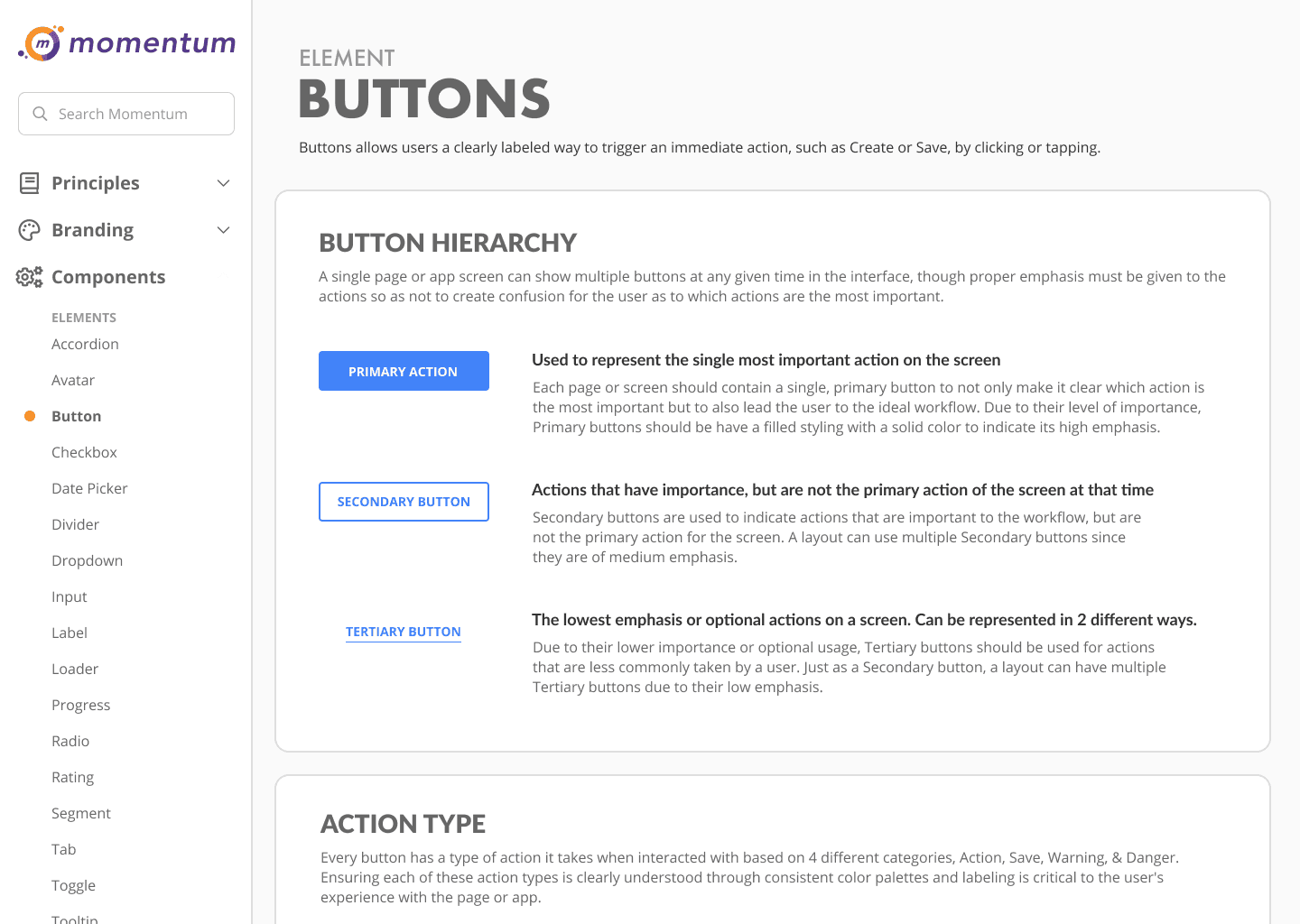


Momentum grew successfully beyond my initial vision, becoming the starting point and repository for how all products were built at UniGroup. It reduced development time for new features by a third, established consistent accessible experiences across the platform, accelerated Converge's development timeline, and became the foundation for all apps, marketing branding, product voice and tone, and document templates enterprise-wide.
Development
hours saved
3k+
Converted
products
21
Product ROI
over 5 years
15
m
$
Design Debt
reduction
84
%
Want more details on Momentum?
Ah, so you would like a deeper dive into how we went about creating Momentum and its impact on the business? Great, let's schedule a call and I would be happy to go over it with you!
Check out some of my other projects